
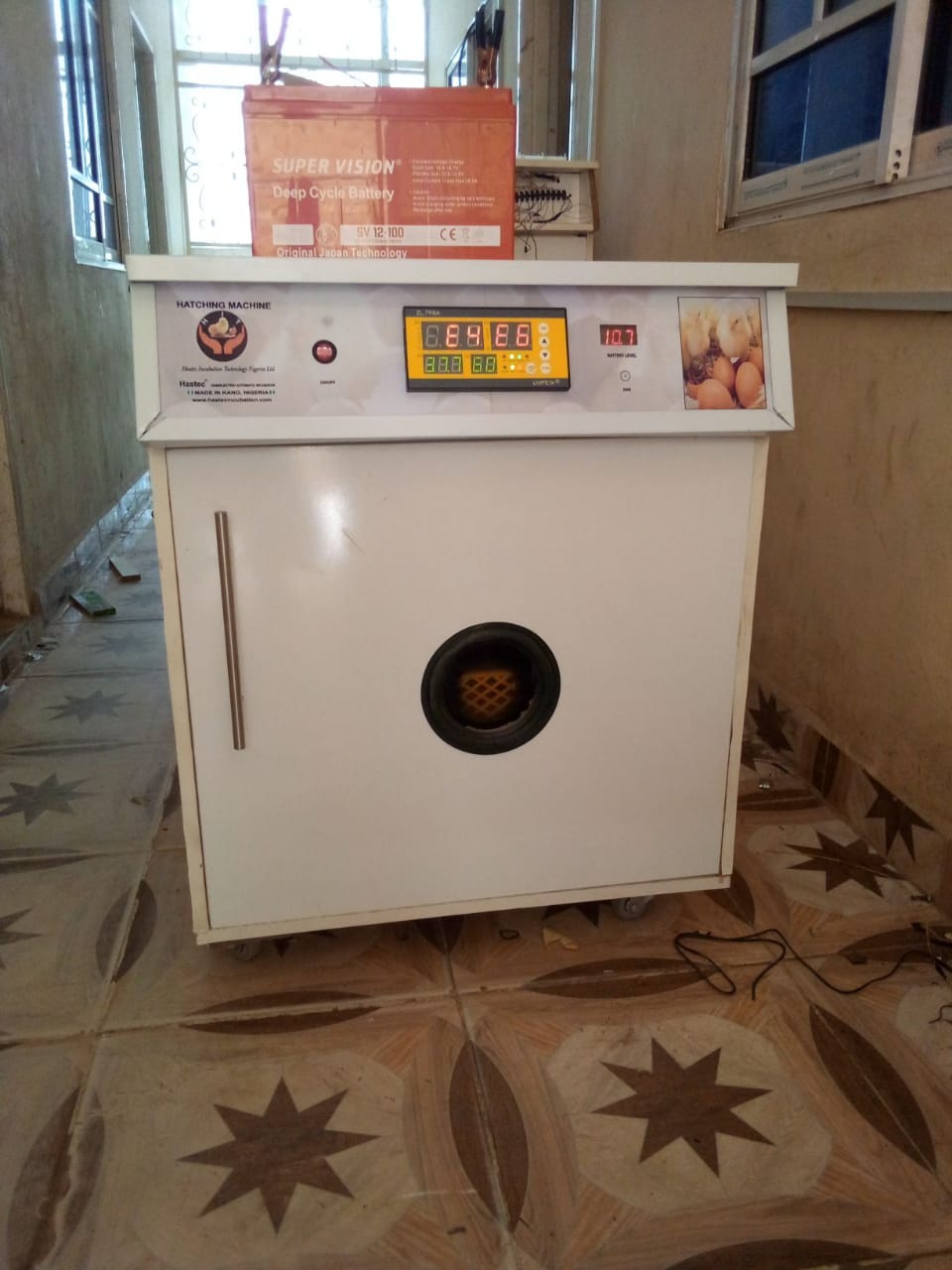
Successful egg incubation depends on maintaining the right conditions throughout the incubation period. For poultry farmers in Nigeria, achieving this requires not only suitable incubation equipment but also careful planning for electricity supply, temperature stability, ventilation, and routine monitoring.
Hastec Incubation Technology Nigeria Limited focuses on incubation solutions for poultry farmers who want to develop and manage their hatchery operations. Understanding how an incubator works—and how to operate it responsibly under local conditions—is an important step towards better hatchery management.
The key principle: An incubator must maintain suitable conditions for embryo development. Reliable operation depends on the equipment, correct settings, proper maintenance, and a practical plan for electricity interruptions.
What Is an Egg Incubator?
An egg incubator is a machine that creates a controlled environment for fertilized eggs to develop and hatch without requiring a brooding bird to provide the incubation conditions.
Depending on the model, an incubator may provide automatic temperature regulation, humidity management, egg turning, and ventilation. These functions work together to support the developing embryos.
However, an incubator cannot make an infertile egg fertile. The quality of the eggs, their handling and storage, and the management of the incubation process all influence hatchery results.
How Does an Automatic Egg Incubator Work?
Automatic incubators are designed to manage important incubation functions with less routine manual intervention. Farmers must still monitor the equipment, follow the manufacturer's instructions, and respond appropriately when a problem occurs.
1. Temperature Regulation
Developing embryos require a suitable and consistent temperature. Temperature that is too high or too low, particularly for extended periods, can affect embryo development and hatchability.
An incubator's temperature control system regulates heating to help maintain the selected operating temperature. The exact setting depends on the bird species, the incubator design, and the manufacturer's instructions.
- Use the recommended temperature for the species being incubated.
- Check that the temperature sensor and display are functioning correctly.
- Monitor the incubator for unexpected temperature changes.
- Avoid opening the machine unnecessarily during incubation.
2. Humidity Management
Humidity affects moisture loss from eggs during incubation. Too much or too little moisture loss can negatively affect embryo development and hatching.
Humidity requirements change during the incubation process, especially when eggs approach hatching. Farmers should follow the recommended settings for their species and incubator model rather than use one setting for every type of egg.
3. Automatic Egg Turning
Many automatic incubators include a mechanism that turns eggs at regular intervals. Appropriate turning helps support normal embryo development during the relevant stages of incubation.
Farmers should verify that the turning mechanism is working and follow the manufacturer's instructions on when to stop turning eggs before hatching.
4. Ventilation and Air Circulation
Developing embryos require oxygen and release carbon dioxide. Appropriate ventilation and air circulation help maintain a suitable incubation environment and distribute heat within the machine.
Incubator vents should be kept clear, and ventilation should be managed according to the equipment instructions. Blocking vents or making unapproved modifications can interfere with the incubation environment.
Why Electricity Supply Matters in Nigeria
Electricity interruptions are an important consideration for poultry farmers operating incubators in Nigeria. An interruption may affect heating, air circulation, humidity control, and other electrically powered functions, depending on the equipment design.
The impact of a power interruption depends on several factors, including:
- The duration of the interruption.
- The temperature inside the incubator when power is lost.
- The number and stage of development of the eggs.
- The incubator's insulation and design.
- The surrounding temperature and ventilation conditions.
- Whether a suitable backup power source is available.
Important: Do not assume that an incubator can maintain its operating conditions indefinitely without electricity. Actual performance during an outage depends on the machine and the surrounding conditions.
How to Prepare Your Hatchery for Power Interruptions
Planning for electricity interruptions is part of responsible hatchery management. Farmers should establish a practical power plan before loading valuable eggs into an incubator.
1. Assess Your Electricity Supply
Understand the reliability of the electricity supply at your hatchery. Consider how frequently interruptions occur, how long they typically last, and whether voltage fluctuations are a concern.
This information helps you plan the capacity and type of backup system your operation may require.
2. Consider a Suitable Backup Power Source
Depending on your production scale, budget, and location, possible backup options may include a properly sized generator, an appropriate inverter and battery system, or another compatible power solution.
Before purchasing backup equipment, assess the incubator's power consumption, starting requirements, operating duration, and the other electrical loads that must be supported.
- Confirm that the backup source is compatible with the incubator.
- Calculate the expected energy requirement for the intended backup period.
- Arrange safe installation and adequate ventilation where applicable.
- Test the backup system before depending on it during an incubation cycle.
- Maintain the equipment according to the manufacturer's instructions.
3. Monitor Incubation Conditions
Regular monitoring helps farmers identify problems early. Where possible, maintain a reliable way to check the incubator's temperature and other important operating conditions.
Farmers should know what to do if the display, sensor, heating system, turning mechanism, or power supply stops working.
4. Establish an Emergency Procedure
A written emergency procedure helps ensure that problems are handled promptly and consistently.
Your procedure should identify:
- The person responsible for responding to an alarm or outage.
- How to activate the approved backup power source.
- How to check whether the incubator is operating normally after power returns.
- Who to contact for technical assistance.
- How to record interruptions and any unusual incubation conditions.
Avoid unapproved repairs or adjustments that could damage the equipment or create an electrical safety risk.
Choosing an Incubator for Nigerian Conditions
Choosing an incubator involves more than comparing egg capacity or purchase price. Farmers should consider the operating environment, available power supply, production goals, and access to technical support.
Before selecting an incubator, assess the following factors:
- Capacity: Choose a model that matches your planned production volume.
- Temperature control: Understand how the equipment regulates and displays temperature.
- Humidity management: Confirm how humidity is controlled and monitored.
- Egg turning: Check whether the model includes automatic turning and understand how it operates.
- Power requirements: Confirm the machine's electrical specifications and expected energy consumption.
- Backup compatibility: Determine what type of backup power system is appropriate for the model.
- Maintenance: Ask about cleaning, servicing, replacement parts, and routine inspections.
- Technical support: Check the availability of operating guidance and after-sales assistance.
Practical advice: Ask the supplier to explain the incubator's power requirements, control functions, maintenance needs, and backup-power compatibility before making a purchase.
Operating an Incubator Correctly
Even a suitable incubator requires proper operation. Following a consistent procedure helps reduce avoidable errors and makes it easier to identify problems.
- Inspect the machine: Check the equipment, power connection, controls, sensors, and turning mechanism before use.
- Clean and prepare it: Follow the manufacturer's cleaning and preparation instructions.
- Check the settings: Confirm that the selected conditions are appropriate for the bird species.
- Load suitable eggs: Use eggs from a reliable source and handle them according to recommended procedures.
- Monitor operation: Check the machine and record important readings as recommended.
- Prepare for emergencies: Ensure that backup arrangements and contact details are available.
- Manage hatching: Follow the recommended procedures for the final incubation stage and chick removal.
- Review the results: Record the number of eggs set, fertile eggs identified, chicks hatched, and any problems encountered.
Common Incubation Problems to Avoid
Some hatchery problems can be reduced through careful preparation and regular monitoring.
Ignoring Power Requirements
Installing an incubator without understanding its electricity needs can leave a hatchery unprepared for outages. Confirm the power requirements and plan for interruptions before beginning production.
Incorrect Temperature or Humidity
Incorrect settings can affect embryo development. Use the instructions supplied for your incubator and the species being incubated.
Neglecting Maintenance
Dust, poor cleaning practices, faulty sensors, damaged components, or blocked ventilation can interfere with operation. Follow a routine maintenance schedule and seek qualified assistance when needed.
Failing to Keep Records
Without records, it can be difficult to understand why one batch performs differently from another. Track incubation settings, power interruptions, egg sources, and hatch results to support continuous improvement.
How Hastec Incubation Technology Can Help
Hastec Incubation Technology Nigeria Limited serves poultry farmers who need incubation equipment and support for their hatchery operations.
When considering a Hastec incubator, discuss your production goals and operating conditions with the team. Explain the electricity supply available at your location and ask which model best suits your needs.
Useful questions to ask include:
- What are the incubator's rated power requirements?
- Which temperature, humidity, and egg-turning controls are included?
- What backup power arrangements are compatible with the model?
- What routine maintenance does the machine require?
- What installation guidance and technical support are available?
These questions help you evaluate the equipment based on your actual operating needs rather than relying on assumptions.
Planning to Start or Expand Your Hatchery?
Choosing suitable incubation equipment is an important step towards building a well-managed hatchery. Consider your production capacity, electricity supply, backup arrangements, and technical support needs before investing.
Contact Hastec Incubation Technology Nigeria Limited to discuss your hatchery requirements and identify the equipment options suitable for your operation.
Hastec Incubation Technology Nigeria Limited
Conclusion
Egg incubation requires appropriate temperature, humidity, ventilation, egg turning where applicable, and consistent monitoring. In Nigeria, reliable power planning is another important consideration for hatchery operators.
Understanding your incubator's requirements, choosing compatible backup power equipment, following operating instructions, and maintaining accurate records can help you manage risks and run your hatchery more responsibly.
Before investing in an incubator, ask questions, understand the equipment's capabilities, and prepare for the conditions in which it will operate.
Frequently Asked Questions
Can an egg incubator work during a power outage?
An electrically powered incubator may stop performing some or all of its functions when power is interrupted. Whether it can continue operating depends on whether a compatible backup power source is available and functioning.
Does every incubator have a built-in backup battery?
Not necessarily. Backup features vary by model. Confirm the exact specifications with the supplier rather than assuming a battery or other backup system is included.
Can I use an inverter to power an incubator?
Potentially, provided the inverter and battery system are correctly sized and compatible with the incubator's electrical requirements. Consult a qualified installer and the equipment supplier before connecting the system.
Will an incubator guarantee a high hatch rate?
No incubator can guarantee a particular hatch rate. Results depend on egg fertility and quality, storage and handling, incubation conditions, equipment operation, and other management factors.
What should I ask before buying a Hastec incubator?
Ask about capacity, power consumption, temperature and humidity controls, egg turning, maintenance, backup-power compatibility, installation, and technical support.
How much does it cost for 150